
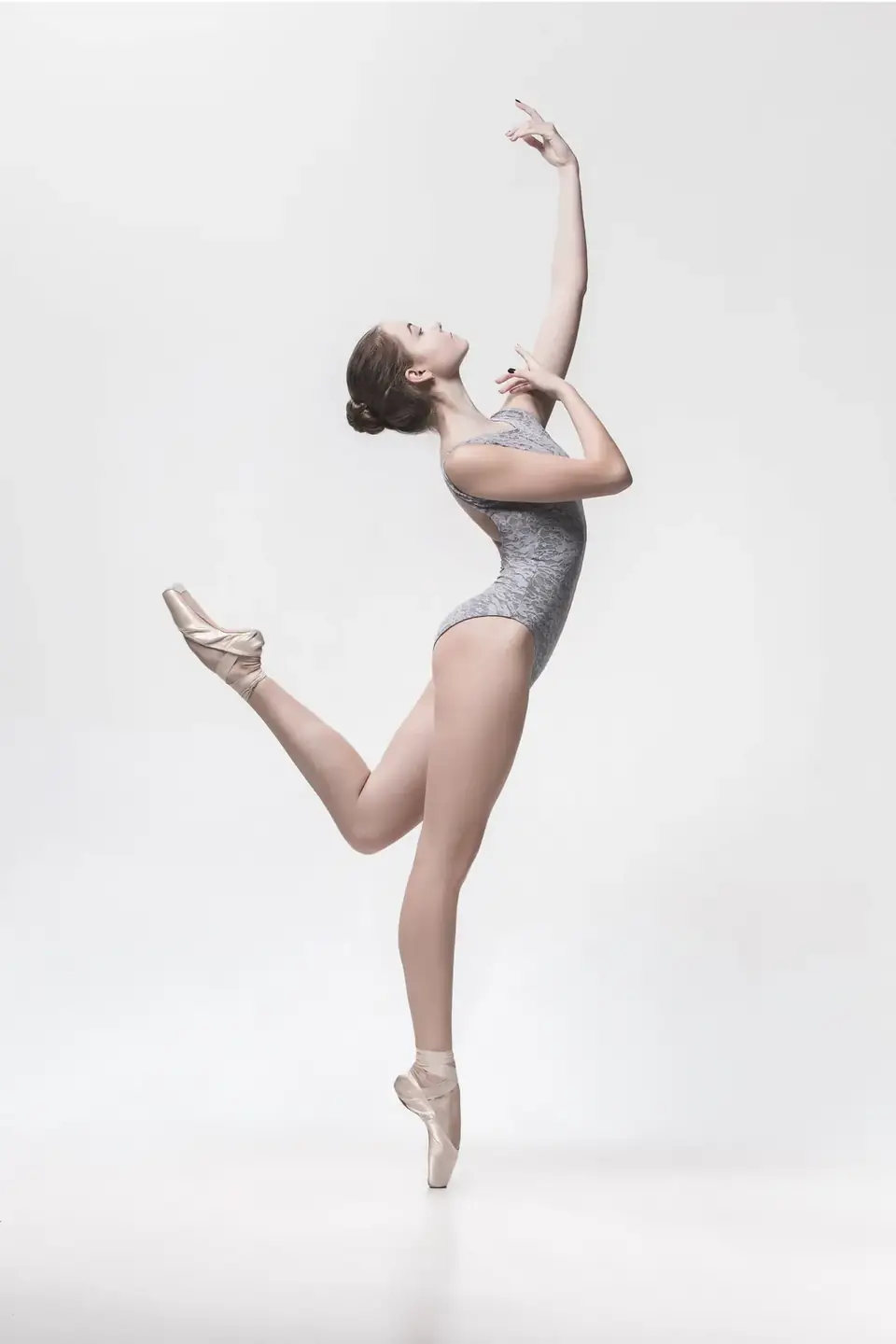
Turnout is one of ballet's most recognisable images and one of its easiest ideas to oversimplify. The final position of the feet can make it look as though there is one angle to achieve, but external rotation is distributed across several segments. Hip anatomy is important, but not exclusive. When a dancer tries to produce more turnout than available range allows, additional rotation may be sought through the tibia, knee, ankle or foot. This is what the literature commonly describes as compensated turnout.
A 2021 systematic review asked directly whether forced or compensated turnout leads to musculoskeletal injury. Its answer was less definitive than pedagogical tradition sometimes implies. Only seven studies met the inclusion criteria, and methodological quality was low, with major variation in how both alignment and injury were measured. The review could not establish a firm causal relationship. That does not make compensation irrelevant; it means science cannot yet turn an intuitive association into a universal rule.
The difficulty of measuring turnout helps explain the uncertainty. A photograph of feet on the floor does not reveal how much rotation came from the hip, how much occurred at the knee or how much was produced through pronation and foot rotation. Passive mobility and active control are also different. One dancer may have large available range and limited ability to organise it in movement; another may have less range and excellent control within that limit.
For teaching, the safest implication is to move away from one ideal number for everyone. The aim can be to maximise organisation within individual anatomy rather than turning the floor into a flexibility test. Efficient turnout is less about opening the feet and more about sustaining a coherent chain through plié, relevé, travelling and jumping.