
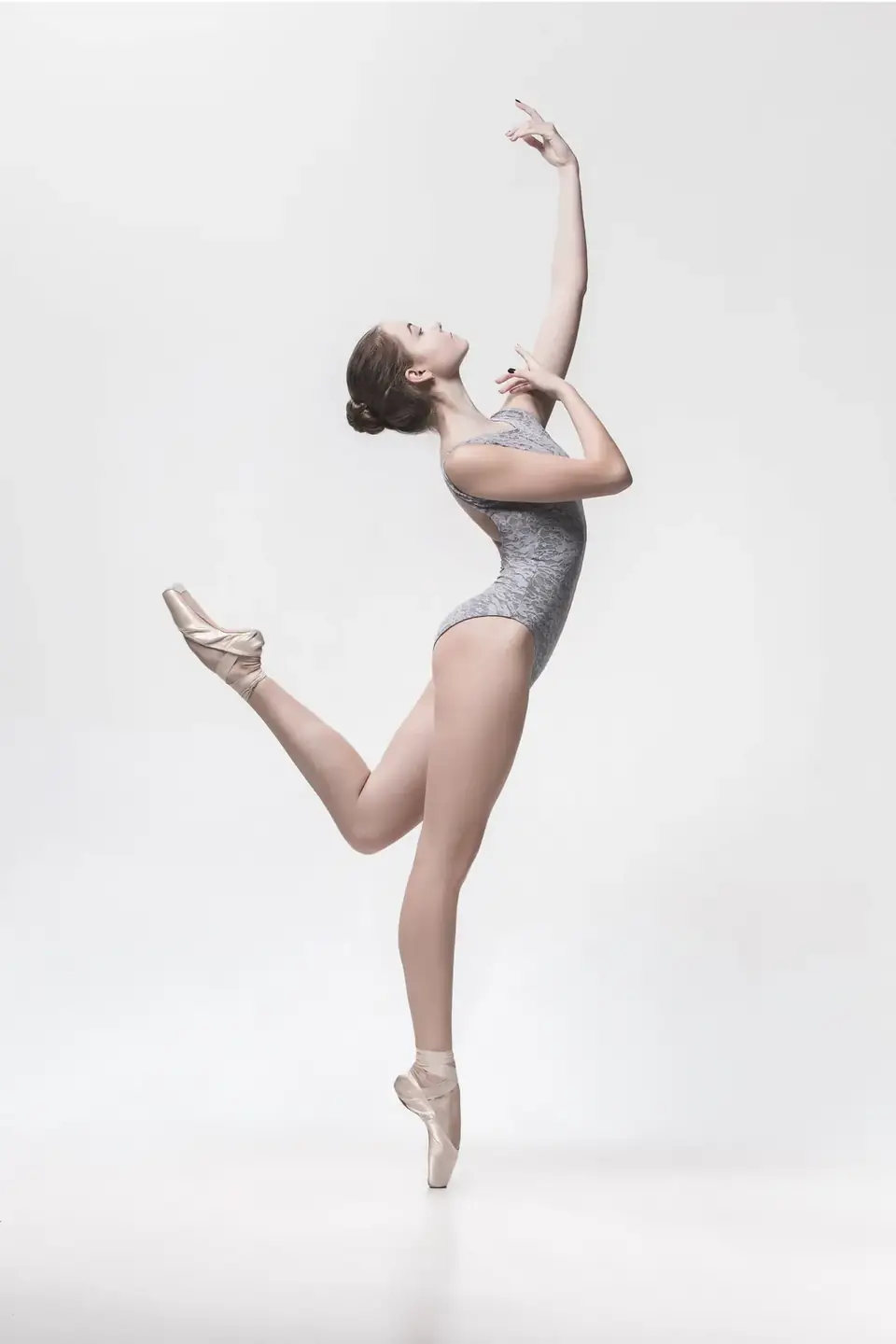
In dance, balance is often described as though it were a position that can be achieved and then held. Biomechanically, the picture is different: the body remains stable because it keeps correcting. Centre of mass, base of support, visual information, the vestibular system and proprioception are reorganised through every weight transfer, turn and change of direction. A systematic review of classical ballet dancers found balance differences associated with training experience, yet it also showed that comparing dancers with non-dancers does not yield one simple universal rule. Balance is task-specific and depends on the conditions under which the body is asked to solve the problem.
That distinction matters because the dance literature remains smaller and more heterogeneous than the apparent precision of a laboratory can suggest. Clarke and colleagues reviewed 47 studies on balance in theatrical dance but found only one randomised controlled trial, alongside wide variation in tests, populations and instruments. In 2024, Senger and colleagues reviewed balance-training protocols and identified just nine intervention studies, most rated fair or poor in quality. There is useful knowledge here, but not enough to turn every finding into a teaching prescription or a promise of performance improvement.
Across those intervention studies, neuromuscular training produced the most consistent improvements in measured balance. That does not mean a single drill can manufacture a more stable dancer. A more useful reading is that balance can be challenged by changing what the system has to integrate: support, direction, speed, transitions, segmental control and sensory information. For technique, the question then shifts from “how do I stay still?” to “how do I organise the body so it remains available through change?”. The difference sounds small, but it leads to a very different way of watching movement.
The foot and ankle make the discussion particularly concrete. They form the immediate interface with the floor and, in ballet, they also carry exceptional demands for range, support and repetition. The systematic review by Li, Adrien and He examined biomechanical factors associated with foot and ankle injury, including overuse, mechanical features of the movement and conditions of pointe work. This does not justify remote diagnosis or reduce prevention to a visual alignment cue. It does the opposite: it encourages a whole-chain view of how force and control are distributed, because a local correction may be inadequate when the organisation of the movement begins elsewhere.
Technology has dramatically expanded what can be observed. Quadrado and colleagues reviewed work using motion capture, force platforms, electromyography and other sensing systems to describe motor behaviour in ballet. These tools quantify trajectories, timing, forces and control strategies that the naked eye cannot measure. Better measurement, however, is not the same as explaining the whole dance. Chang and colleagues reviewed studies linking perceived dance quality with biomechanical motion and found meaningful relationships, but no general equation that turns amplitude, speed or variability into artistic value. Performance remains mechanical, perceptual and expressive at the same time.
That boundary is where science and pedagogy can meet without either trying to replace the other. Science makes the questions sharper — balance in which task, with what sensory information, during which transition, under what fatigue? — and helps us move beyond vague explanations when movement can be observed and tested. Technique integrates that information with musicality, intention, repertory and embodied experience. This is the editorial premise for DanceNeo’s technical work: evidence should refine the way movement is read, while making clear what comes from research, what is interpretation, and what belongs to the tradition and experience of teaching.