
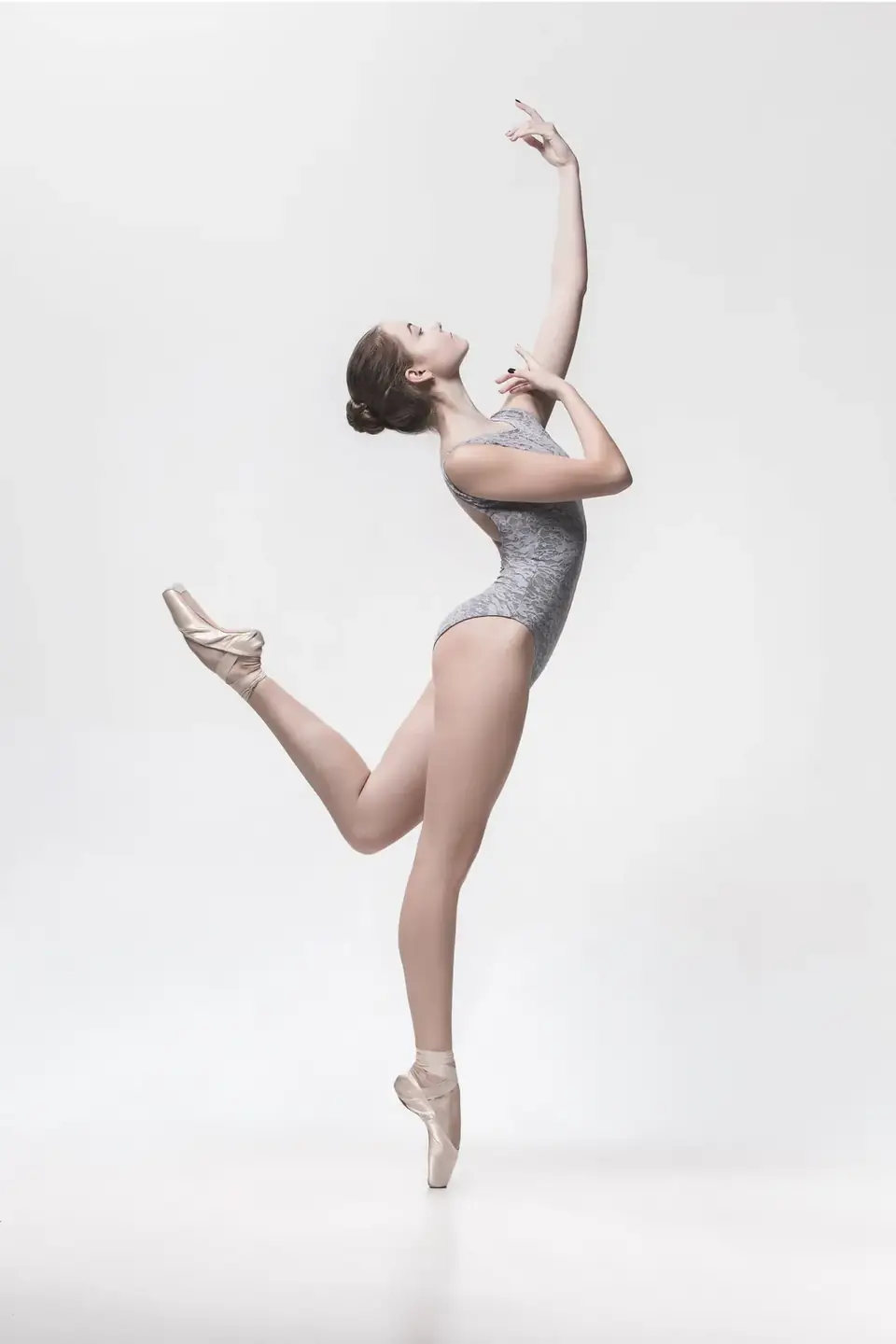
In dance, the foot does more than support the body. It receives load, adapts to the floor, contributes to propulsion, controls landings and responds to highly specific aesthetic demands. In ballet, relevé, pointe work, jumping and high repetition intensify the challenge. Systematic reviews of dance injury consistently show that the lower extremity carries a large share of reported problems, with the foot and ankle repeatedly among the most affected regions.
That does not imply a single cause. Research discusses overuse, footwear condition, joint function, range of motion, training load and previous injury. A biomechanical review focused on foot and ankle found only nine eligible studies, illustrating how limited the evidence still is for separating each mechanism. Even plausible associations require caution: foot pain can emerge from a combination of exposure, technique, strength and anatomy rather than one visible detail.
The teaching value lies in avoiding reductionism. Correcting the arch alone or demanding more point does not necessarily solve lower-limb organisation. Ankle control also depends on the knee, hip, trunk, speed and movement context. During landing, for instance, load absorption is distributed across several segments. If one contributes less, another may carry more demand.
Thinking of the foot as an interface helps connect science with sensation. Teachers can observe support quality, weight transfer, stability and response to fatigue; health professionals can assess pain or loss of function; dancers can recognise that strength and mobility have to coexist. Aesthetic precision grows from a structure that can yield, support and return energy at the same time.