
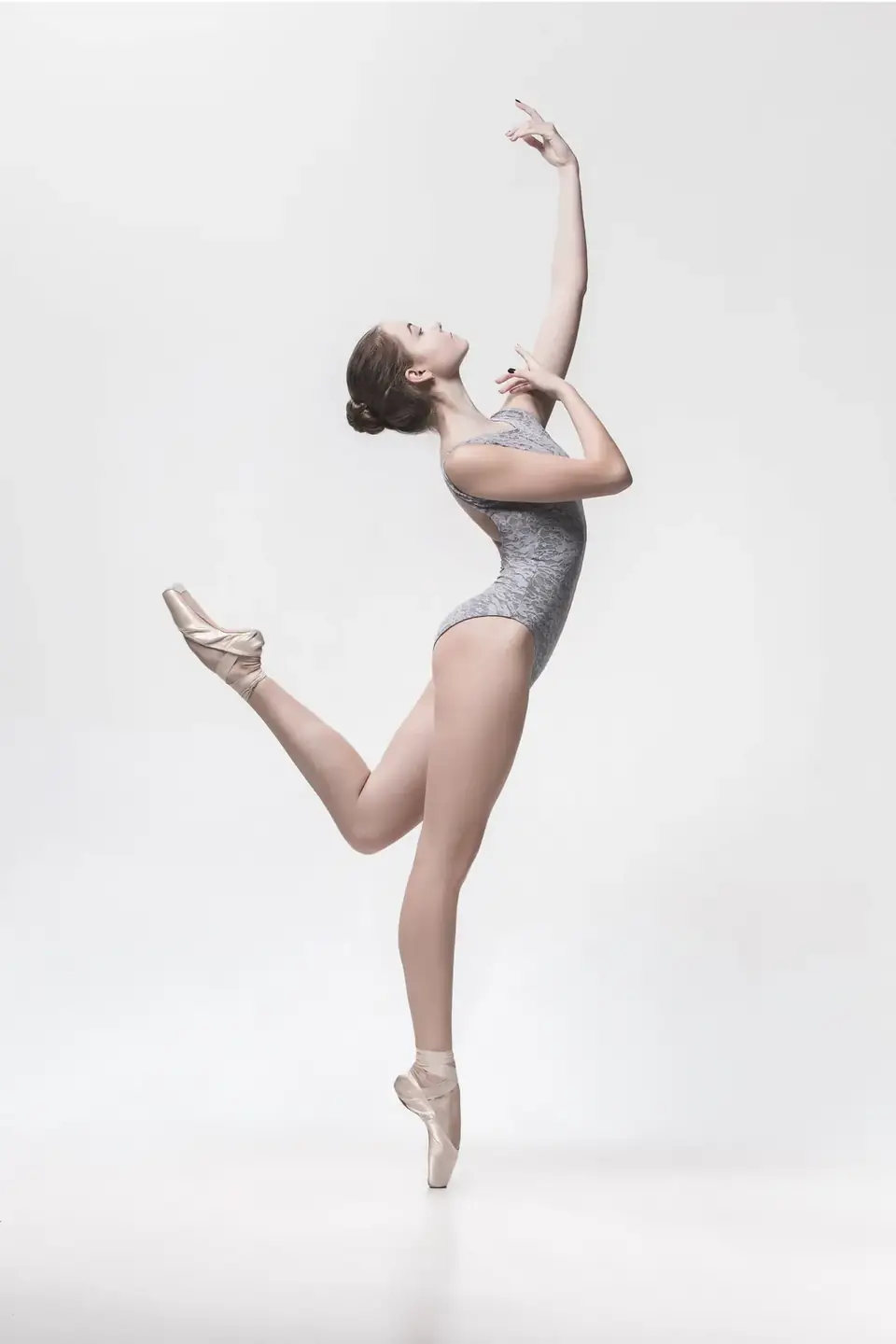
Jumps look brief, but they compress a complex sequence of mechanical decisions. During take-off, the dancer has to transform force into vertical or horizontal velocity without losing the shape demanded by choreography. During landing, the problem reverses: energy must be absorbed through the ankle, knee, hip and trunk within a short time. A systematic review of ballet jumping included 29 studies and found that landing has been studied far more often than take-off, with vertical ground-reaction forces varying widely according to task, technique and experimental protocol.
That range is a useful warning. There is no single 'jump force' that describes every situation. Values change with jump type, surface, footwear, height, experience and measurement method. Even so, the literature suggests that dancers distribute movement in distinctive ways, with substantial ankle involvement and landing strategies that can differ from non-dancers. This supports looking at the whole chain rather than only the final position of the feet.
From a technical perspective, a quiet landing can be a helpful perceptual cue, but it is not a substitute for understanding load. A visually elegant landing can still hide excessive stiffness or compensation, and greater depth is not automatically better. The task is to coordinate joint excursion, control and timing for the movement at hand. When fatigue, speed or repetition changes, the strategy may also need to change.
For teachers and dancers, the implication is straightforward: a jump does not end in the air. Preparing the calf, ankle, knee, hip and trunk, progressing volume and practising varied landing demands are part of teaching the skill. The appearance of suspension depends on how force is produced; the continuity of dancing depends on how that force is accepted on return.