
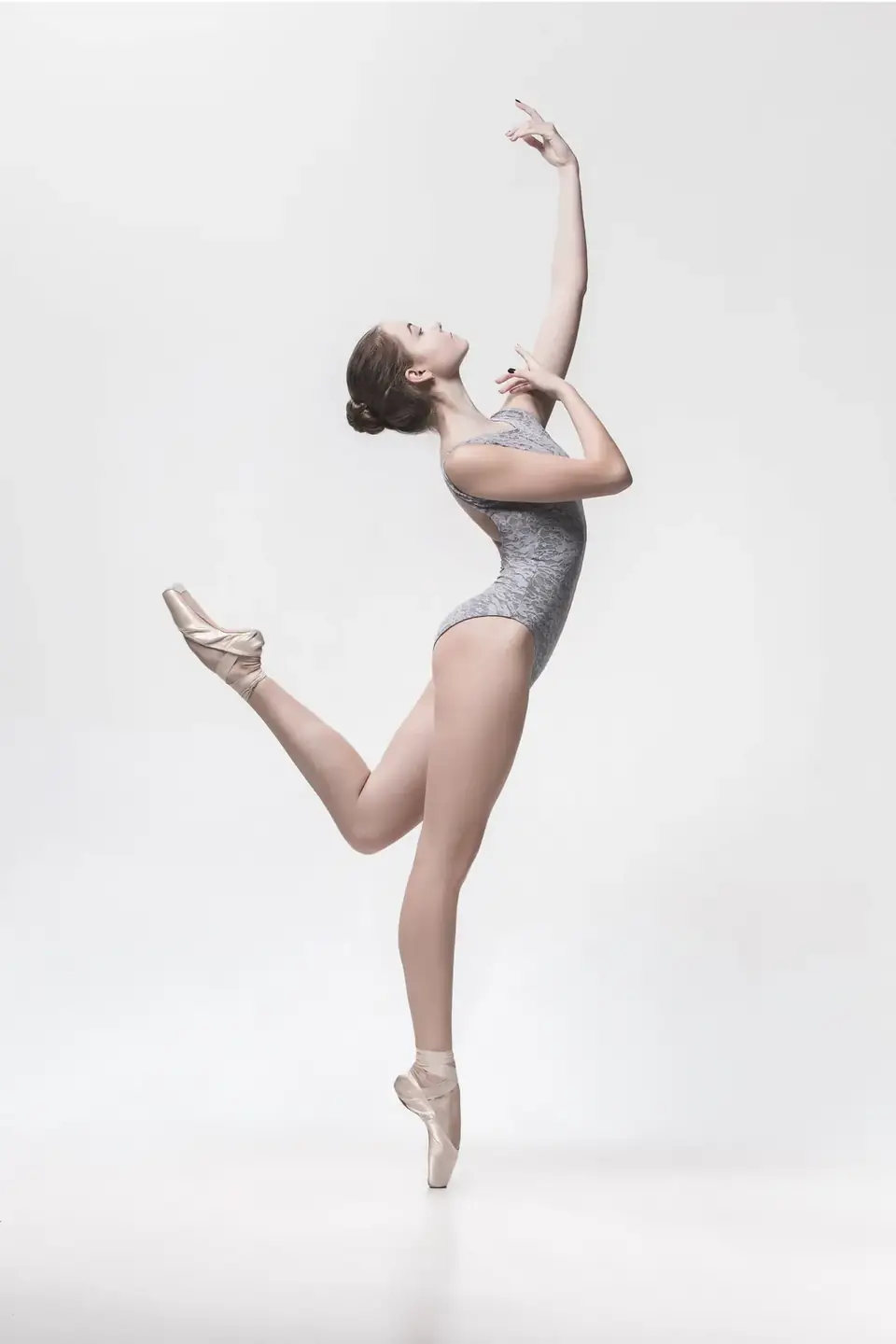
For a long time, parts of dance culture treated strength training as potentially incompatible with line, fluidity or mobility. Current evidence offers little support for that broad fear. A systematic review and meta-analysis of strength and conditioning in dancers included 36 studies and reported improvements in lower-body power, upper- and lower-body strength and, to a lesser extent, flexibility. The important point is not a single effect size. It is that physical adaptation can occur without replacing technical work. Conditioning is most useful when it complements the demands of repertory.
This changes how performance can be understood. A jump is not only a shape to be learned; it requires producing force quickly, organising the trunk and limbs and meeting the floor with control. Partnering, lifts, decelerations and repeated sequences create demands that are not always fully developed by traditional class alone. Conditioning can increase the physical margin available for technical execution, provided progression respects experience, total workload and the artistic calendar.
Science does not, however, support a single prescription for every dancer. Studies vary widely in modality, duration and methodological quality. Ballet, contemporary and other genres differ, as do professionals and students, and programmes aimed at maximal strength are not the same as those aimed at power or endurance. A laboratory improvement also does not automatically become an artistic improvement. Transfer depends on how the stimulus interacts with coordination, timing and intention.
For teaching practice, the strongest contribution is to replace a generic fear of becoming 'too heavy' with better questions: which capacity is limiting the movement, what dose fits the week, and how will the response be monitored? Strength can become a resource for freedom when it expands physical reserve without reducing technical quality. The useful goal is integration between preparation and dance rather than competition between them.