
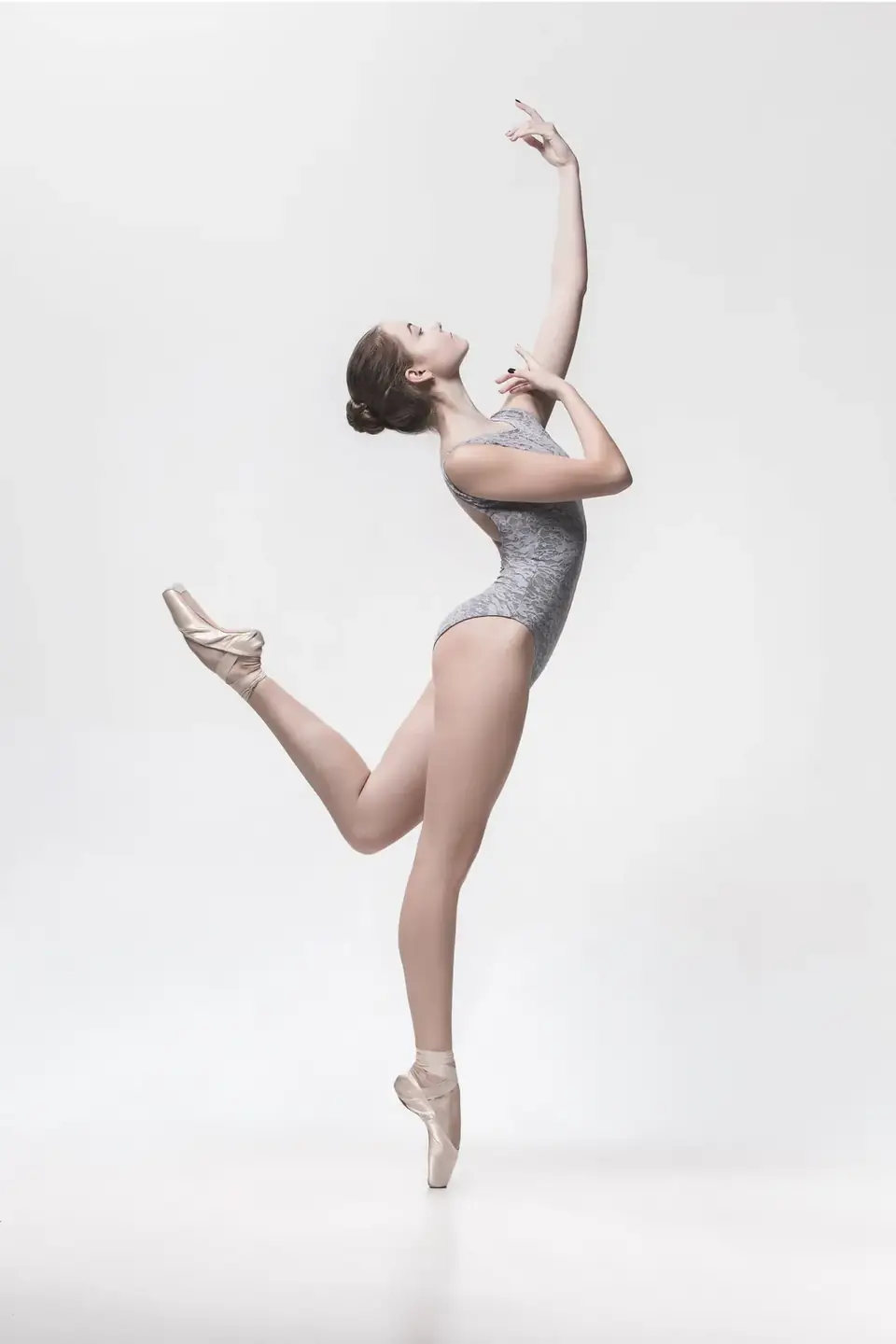
Few pedagogical decisions in ballet carry as much symbolism as the first pair of pointe shoes. It is therefore tempting to search for one objective rule: age twelve, a certain number of classes, a checklist of exercises. A review of pointe readiness literature found, however, that evidence for one validated test or universal protocol remains weak. Many screening tools used in schools are grounded in clinical and teaching experience rather than strong prospective validation.
That does not make the decision arbitrary. Several dimensions make sense to assess together: alignment control, the ability to sustain relevé, calf and foot strength, trunk stability, technical experience, maturation and weekly volume. Growth also matters in adolescents. Rapid changes in range and body proportions can temporarily alter how a young dancer organises movements that previously felt stable.
Pointe adds a specific demand: the body must organise load over a very small base while using footwear that changes the interface with the floor. The shoe offers structure, but it cannot replace control. Starting too early is not defined only by a low age; it can also mean beginning before the dancer can repeat the task with quality through the actual volume of a class.
A responsible decision combines criteria instead of chasing a magic number. Teacher, dancer and, when needed, health professional can consider technique, strength, development and response to training. The better question is not 'what is the right age?' but 'what does this dancer need to organise consistently so that pointe becomes a progression rather than a shortcut?'.