
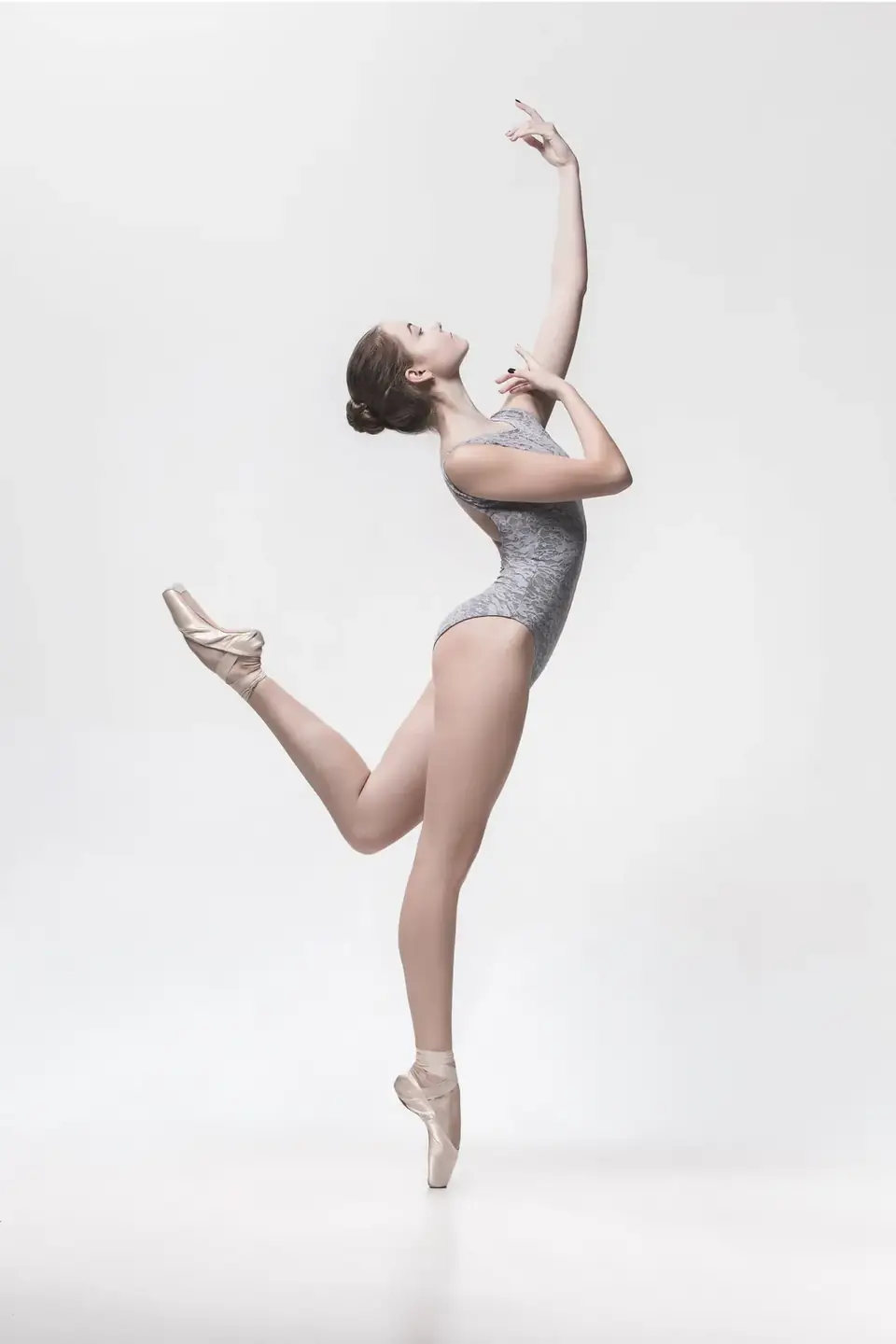
Few joints receive as much aesthetic attention in ballet as the hip. Turnout, développé, arabesque and grand battement depend on range and control, driving research into morphology and pathology in dancers. A systematic review of ballet hip literature included 35 studies and found recurring discussion of structural findings and symptoms. Yet the presence of an anatomical feature on imaging does not, by itself, determine pain or disability.
Dance selects and trains people with different ranges, and the relationship between anatomy and technique works in both directions. Some structures favour certain movements; training improves control and usable range; compensation may appear when a task demands more than a joint offers. Turnout illustrates the point: reducing it entirely to hip rotation ignores other segments, while ignoring the hip also oversimplifies the movement.
Clinically, anterior, lateral or posterior hip pain can have different origins. Clicking is not a diagnosis either. In dancers, interpretation needs to consider workload, symptom-provoking movement, active and passive range, strength and history. The same imaging finding may be irrelevant for one person and important for another. This matters particularly in highly trained populations whose anatomical and motor adaptations may differ from sedentary norms.
For teaching, the implication is to value usable range rather than displayed range alone. A large movement supported by efficient organisation is different from one achieved by shifting load into a region that is poorly controlled. Anatomy sets conditions; technique learns to work within them. Science can help recognise limits without turning anatomical difference into a verdict.